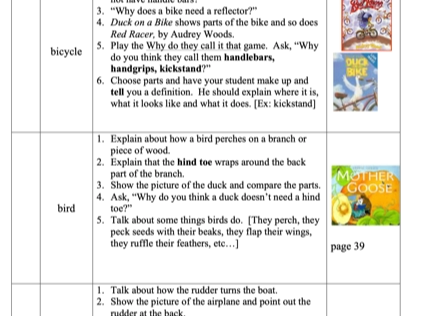


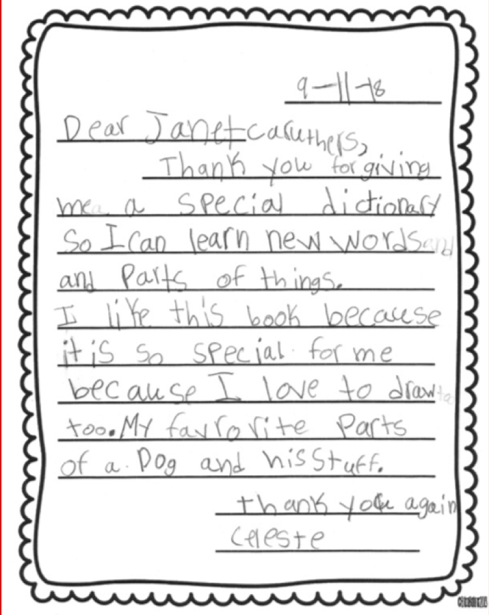
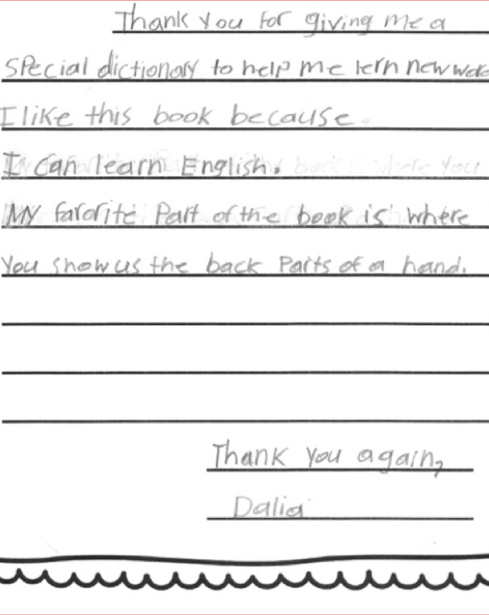
The Illustrated Dictionary of Everyday Things beside a labeled bicycle page

The Dictionary Project

A simple, powerful way for service clubs to give every child the words they need to thrive academically—and unlock opportunities for life.

Hello Service Club Members

Thank you for your service!

Soroptimist International emblem
Soroptimist International of Mid-Atlantic Online
Kiwanis International emblem
Kiwanis International
Lions International emblem
Lions International
General Federation of Women's Clubs emblem
General Federation of Women’s Clubs

Our Why

Studies have shown that vocabulary size is one of the strongest predictors of academic success.1

The Problem

Children brought up in homes at or below the poverty level often enter school with weaker vocabularies than their more affluent classmates. They have heard fewer words at home, have not been read to regularly, and have had fewer opportunities for quality conversations with family members. A landmark study found that, by the time they enter kindergarten, they often have less than half the vocabulary of their more affluent classmates.2

Why is this a problem? This is a huge problem because we must know the meaning of at least 95 percent of the words in a passage to understand it. Even when children work hard to decode—or sound out—words, unfamiliar vocabulary can keep them from understanding what they read. Studies also show that the more words we know, the faster we can learn other words; vocabulary growth actually accelerates learning.3

The only way to fill the gap between the words children should know and the words they actually do know is to focus on teaching the foundational words they should have learned through everyday experience. These are the words in children’s reading books and reading assessments. These are the words children need to talk and write about their everyday experiences in a more precise and confident manner. These are the foundational words included inThe Illustrated Dictionary of Everyday Things.

Our How

The Dictionary Project helps close that gap in vocabulary size by providing picture dictionaries to second graders in high-poverty schools. This dictionary is filled with the very words they need. To make the dictionary even more effective, we give each second-grade teacher The Dictionary Toolkit, with lessons, assignments, and activities to activate and review the new words learned in The Illustrated Dictionary of Everyday Things. If children learn the labels in this book, they will have a storehouse of words to use in reading, writing, listening, and speaking. They will do better in school and have brighter futures. These children desperately need our help.

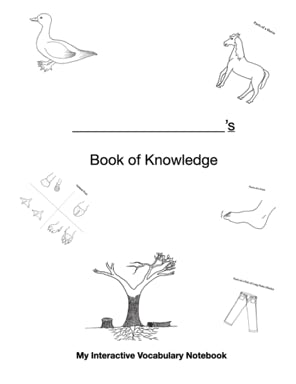
For the 2025–2026 school year, we also gave each second grader in our area’s low-income schools a personal vocabulary notebook called Book of Knowledge, where students record their learning. Students trace pictures from their dictionary and label the parts. They love building their own book.

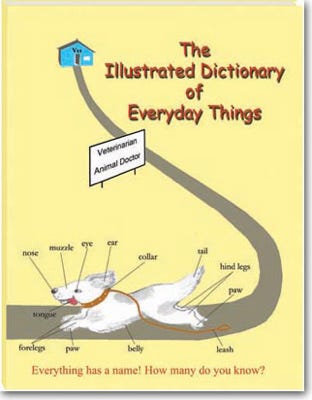
Cover of The Illustrated Dictionary of Everyday Things
Cover of the Book of Knowledge vocabulary notebook
“Helping disadvantaged children is the reason I wrote this book!”Janet Caruthers, Ed. S.

The Illustrated Dictionary of Everyday Things and The Dictionary Toolkit

Cover of The Illustrated Dictionary of Everyday Things

The Illustrated Dictionary of Everyday Things

Written by a Title I teacher who started a list of common, everyday words her students in grades 2–5 did not know—but should have. That list became this book. If students learn the labels in this book, they will have a storehouse of words to draw from when reading, writing, listening, and speaking. These are the words children need to know: the names of real things in their everyday lives.

See the dictionary resources
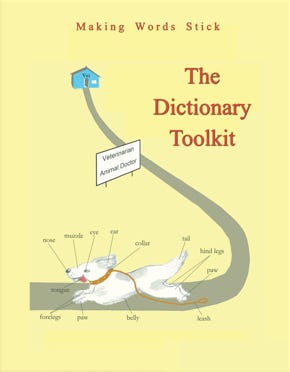
Cover of The Dictionary Toolkit

The Dictionary Toolkit

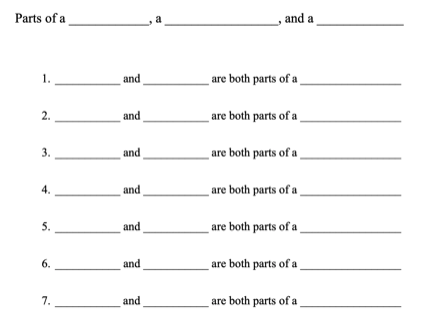
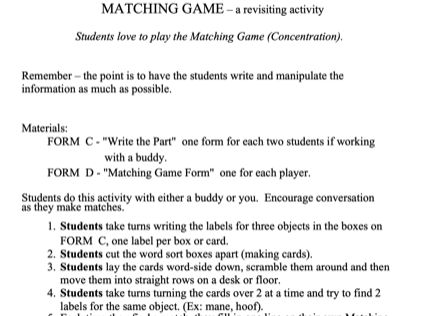
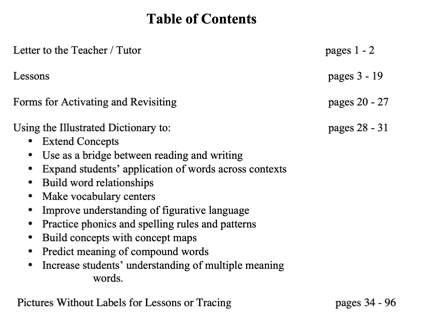
The Dictionary Toolkit is the teacher supplement to The Illustrated Dictionary of Everyday Things. It includes lessons, assignments, and activities to help students activate and review the new words they are learning. You’ll also find 100 Days of Bellwork and activity sheets that combine vocabulary, phonics, and spelling practice.

Peek inside The Dictionary Toolkit
Open the full toolkit

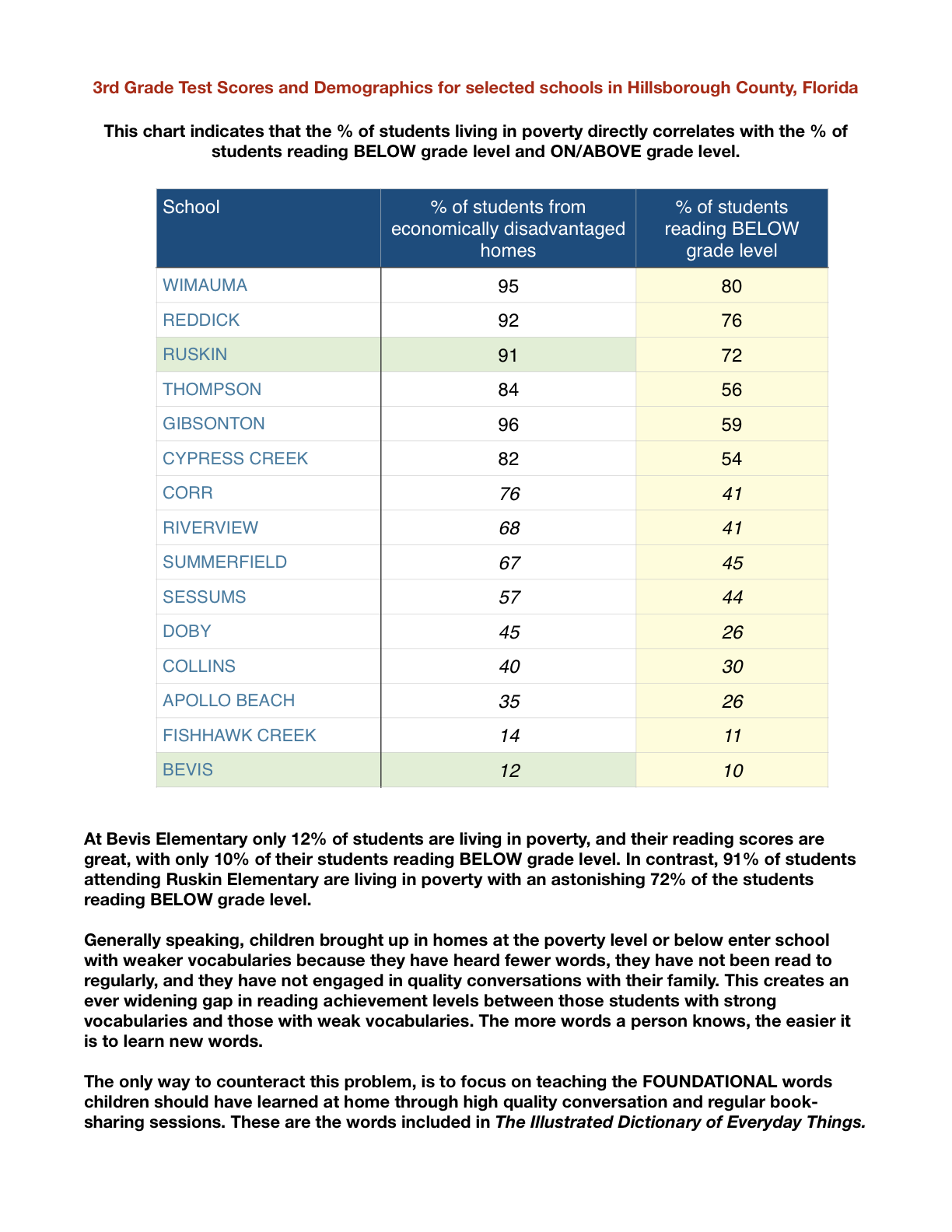
Chart Showing the Correlation Between Children Living in Poverty and Their Reading Levels.

If you look below, you’ll find a chart with data that I compiled using schools in my district showing how economic status correlates with reading scores.

Chart comparing poverty and student reading levelsClick to Open

Part of the 2026 Expansion of the Dictionary Project for Fifth-Grade Students

Cover of the Constitution and Declaration of Independence booklet

There is a wonderful website printed on the back of this booklet that provides:

  • Assurance that the content stays accurate and aligned with the National Archives.
  • Information presented in a simple, engaging way for students.
  • Natural guidance in each section to continue learning through official National Archives resources.

Contains:

  • The United States Constitution.
  • The Declaration of Independence.
  • A “Walk Through the Constitution” activity.
  • Famous patriotic quotations.
  • An index for easy reference.
  • 48 pages in a convenient 8.5-by-5.5-inch size.

Use it as a fundraiser!

Find out how the fifth-grade project works
  1. Moody et al. (2018), Vocabulary Instruction: A Critical Analysis of Theories, Research and Practice.
  2. Hart & Risley, Meaningful Differences in the Everyday Experience of Young American Children.
  3. Frank, Braginsky, Yurovsky & Marchman (2017), Wordbank: an open database of children’s vocabulary development.