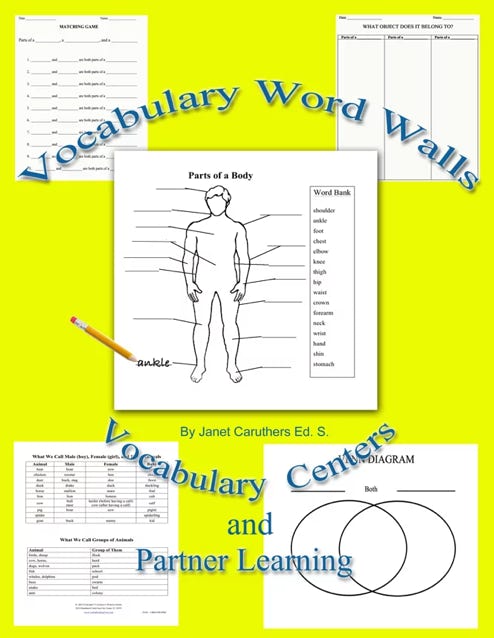
Vocabulary Word Walls, Centers, and Partner Learning
Research suggests that retention of new vocabulary words is greatly improved if students interact with new words in a variety of ways and teachers offer opportunities for spaced review.
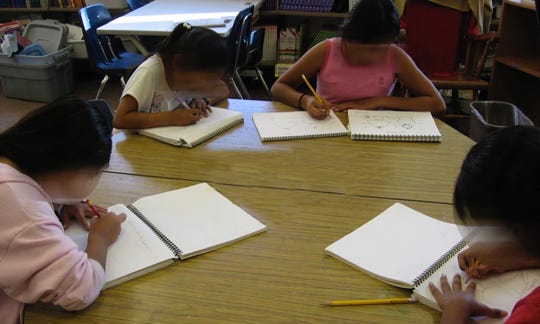
Let students talk about their learning.
When I was a classroom teacher, I loved to hear my students talking about their learning. They were engaged and learning from each other, so I spent much of my time creating opportunities for them to do just that! I believe that you will also love hearing your students work together to enhance their understanding and retention of new vocabulary.
Click the article preview to read more.
141 Pages of Ideas, Pictures, and Forms — Free Download
The pictures in this book—Sections I and II—will help students learn the basic vocabulary necessary for reading comprehension and precise writing. The pictures will help with reading comprehension by giving students the words they need to visualize as they read, make inferences, determine the meanings of unknown words, and draw conclusions. They will improve students’ writing by giving them the words they need to write precisely about their daily activities and fictional pieces.
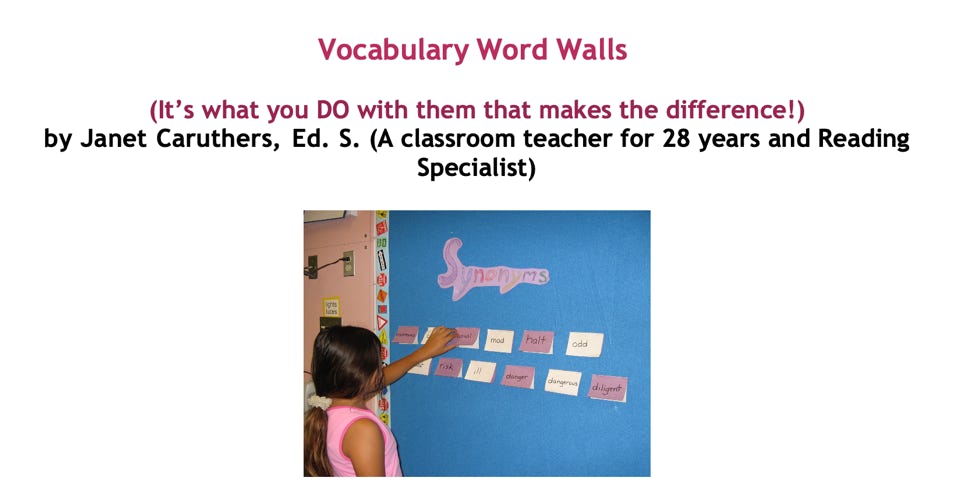
The activities in Sections III and IV are all about giving your students opportunities to interact with new words in a variety of ways for spaced review. You will find plenty of ideas for vocabulary centers, partner learning, and using word walls. The activities address two of the four broad research-based practices for building vocabulary: building word consciousness and revisiting new knowledge—the fourth part of explicitly teaching new words. Section IV gives you actual templates that students can use during partner learning or at the vocabulary center. Some even require students to make activities for their partners. Fun!
Download the complete book